
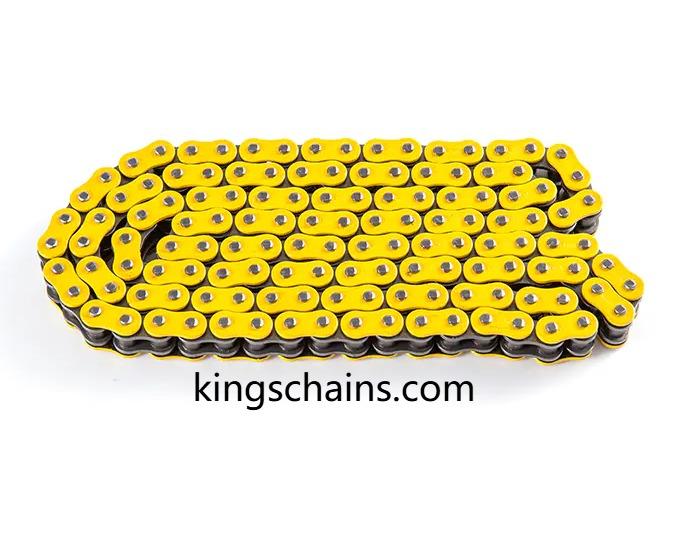
A motorcycle drive chain operates in an environment where movement, friction, road residue, and changing weather conditions can all affect its condition. When comparing Sealed Motorcycle Chain designs, buyers should look beyond the visible links and consider how the sealing structure works with the pins, bushings, rollers, and side plates. These components form an interconnected system, and their material quality, assembly accuracy, and maintenance requirements influence how the chain performs throughout regular use.
Steel remains central to chain construction because different components must withstand repeated movement and mechanical loading. The side plates connect the links, while pins and bushings form the internal joints that allow the chain to bend around sprockets. Rollers help manage contact with the sprocket teeth. Manufacturers select and process materials according to the role of each component, using forming, machining, and heat treatment to achieve the intended properties. Surface quality is also important because uneven finishes or manufacturing defects can affect component contact. For buyers, understanding the material and production approach provides a more useful basis for evaluating a chain than appearance alone.
The defining feature of a sealed chain is the sealing element placed between selected internal components. O-rings and X-rings are common designs that help retain lubricant around the joint and reduce the entry of dirt and moisture. Their shapes differ, and the appropriate design depends on the chain's construction and intended application. Effective sealing relies on more than the ring itself: the contact surfaces, assembly process, lubricant, and overall component alignment also matter. A sealing element must work with the surrounding parts without preventing the chain from articulating smoothly. Buyers should ask manufacturers to explain the type of seal used and the maintenance guidance associated with the product.
Choosing a chain begins with confirming that it is compatible with the motorcycle's transmission system. The chain must match the manufacturer's requirements and work correctly with the existing sprockets and connecting link. Intended riding conditions should also guide selection. Daily commuting, touring, and off-road use expose the drive system to different combinations of dust, moisture, vibration, and road debris. A sealed design may be useful where lubricant retention and contamination control are priorities, but it does not eliminate the need for inspection and care. For distributors and repair businesses, clear fitment information and product identification help customers select an appropriate replacement.
Manufacturing precision influences how effectively the sealing system functions. Pins and bushings need suitable surface conditions, while plates and rollers must be formed consistently so the assembled chain can move through its operating cycle. Seal placement and compression also require attention during assembly. If components are poorly aligned or the sealing elements are damaged during installation, the intended protection may be reduced. Production facilities may use hardness checks, tensile testing, fatigue testing, and dimensional inspection to assess different aspects of quality. Buyers can discuss relevant inspection procedures with suppliers and clarify what documentation is available for their purchasing requirements.
In daily use, a properly matched sealed chain can help reduce the frequency of internal lubrication loss compared with a comparable non-sealed design, although actual maintenance needs vary with the product and riding conditions. External surfaces still collect dirt, water, and road film, so cleaning and lubrication remain necessary. Riders should follow the chain manufacturer's care instructions and use products suitable for sealed chains. Harsh cleaning methods or unsuitable chemicals may damage sealing elements, while excessive lubricant can attract additional debris. Regular inspection for stiffness, corrosion, damaged seals, unusual noise, and uneven wear helps identify issues before they affect the wider drive system.
The rider's experience is shaped by how the chain moves around the sprockets and responds to routine operating conditions. Correct adjustment supports smooth articulation, while incorrect tension can contribute to wear, noise, or unnecessary loading on related components. A sealed chain should be installed with the appropriate tools and connecting link, following the motorcycle and chain manufacturers' instructions. After installation, checking alignment and adjustment helps ensure the chain works with the sprockets as intended. Maintenance should always be carried out with the motorcycle safely secured and the drivetrain completely stopped.
Design and appearance remain relevant for motorcycle brands and parts retailers. Chains may be offered with different surface finishes that complement the look of a motorcycle or suit a particular product collection. However, decorative treatment should not distract from compatibility, sealing integrity, or component quality. Buyers developing a retail or private-label range can consider packaging, product labeling, and consistent presentation alongside the chain's physical finish. Clear information about sealed construction and recommended care can also help customers distinguish between product types and understand their practical requirements.
Jiangshan Wangpai Chain Industry Co., Ltd. manufactures motorcycle chains, including sealed chain designs using O-ring and X-ring structures. Buyers sourcing these products can discuss intended motorcycle applications, compatibility, sealing design, material expectations, inspection practices, and packaging needs with the company. Reviewing product information and confirming application suitability before ordering can help distributors and repair businesses make more informed sourcing decisions. More information about the company's chain products and manufacturing capabilities is available at https://www.kingschains.com/.

 English
 French
 Spanish
 Portuguese
 Deutsch
 Turkish
 Dutch
 Italiano
 Russian
 Romaian
 Portuguese (Brazil)
 Greek